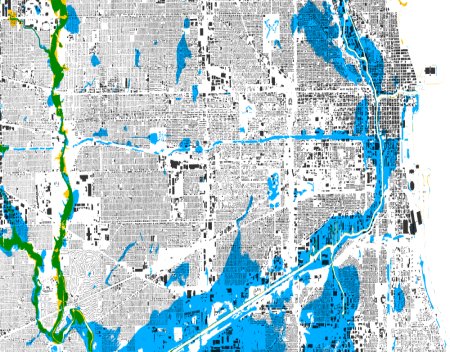
Different Types of Flood Zones
Flood insurance is one of the most misunderstood types of coverage.
Many homeowners assume they’re protected when they’re not, while others skip coverage based on common myths.
Unfortunately, these misconceptions often lead to costly financial surprises after a flood.
In this article, we break down the most common flood insurance myths vs facts so you can make informed decisions about protecting your home and finances.
Fact: Standard homeowners insurance does not cover flooding.
Flooding is defined as water rising from the ground up and affecting multiple properties.
Damage from storm surge, overflowing rivers, heavy rainfall, or coastal flooding requires a separate flood insurance policy.
Without it, homeowners are responsible for all repair costs out of pocket.
Fact: Flooding can happen anywhere.
While high-risk flood zones experience more frequent flooding, a significant percentage of flood claims come from moderate- and low-risk areas.
Changing weather patterns, new development, and drainage issues can all increase flood risk—even in areas that have never flooded before.
Fact: Inland homes flood just as often as coastal ones.
Flooding doesn’t require a hurricane or proximity to the ocean.
Inland flooding can occur due to:
Heavy rainfall
Flash floods
Snowmelt
Overflowing creeks or storm drains
Flood insurance is important for any property exposed to water accumulation, not just coastal homes.
Fact: Flood insurance can be affordable, especially in lower-risk areas.
The cost of flood insurance depends on factors like flood zone, elevation, and property characteristics.
Many homeowners in moderate- or low-risk areas can obtain coverage at a relatively low annual cost—often far less than the expense of repairing flood damage.
Fact: Disaster assistance is limited and not guaranteed.
Federal disaster aid is only available when a disaster is officially declared, and most assistance comes in the form of loans that must be repaid.
Flood insurance provides guaranteed coverage and faster financial recovery, regardless of disaster declarations.
Fact: Flood insurance has coverage limits and exclusions.
Flood insurance typically includes:
Building coverage
Contents coverage (if selected)
However, it does not cover:
Temporary living expenses
Landscaping
Vehicles
Certain items below the lowest elevated floor
Understanding coverage limits is essential when choosing a policy.
Fact: Flood insurance policies usually have a waiting period.
Most flood insurance policies do not start immediately.
There is typically a waiting period before coverage takes effect, meaning you cannot wait until a storm is approaching to purchase protection.
Planning ahead is critical.
Fact: Flood insurance is valuable even when it’s not required.
While lenders may require flood insurance for homes in high-risk flood zones, many homeowners choose to carry coverage voluntarily.
Flood damage can be financially devastating regardless of mortgage requirements.
Fact: Past flooding history does not predict future risk.
Flood maps change, drainage patterns shift, and weather events are becoming more intense.
Many first-time flood insurance claims come from properties that have never flooded before.
Fact: Working with a flood insurance specialist makes it simple.
An experienced flood insurance agency can:
Explain coverage options clearly
Compare policy types
Identify cost-saving opportunities
Ensure lender compliance
The right guidance turns flood insurance into a straightforward and valuable protection.
Believing flood insurance myths can leave homeowners unprotected when they need help the most.
Knowing the facts allows you to:
Protect your home and belongings
Avoid financial hardship
Make confident insurance decisions
Flood insurance is not just for extreme scenarios—it’s a smart safeguard against one of the most common and costly natural disasters.
Flooding is unpredictable, but your financial protection doesn’t have to be.
Understanding the truth behind common flood insurance myths helps you make informed choices and avoid costly mistakes.
Whether you live in a high-risk flood zone or a low-risk area, flood insurance can provide peace of mind and long-term security.

We contacted Mr. Holt for an estimate via email over the weekend prior to a closing on a property, hoping for a response on the following Monday to take with us with confidence in being insured at the settlement table on a Tuesday. He exceeded our expectations not once but in readily responding to the initial request and then to follow-up questions all during the weekend frenzy that occurs before closing. "Impressive and responsive customer service," for sure!
I have known Tim for many years and he is a man with great integrity, work ethic and one of the nicest persons I know. Over the years Tim has provided insurance counseling and advice to our company, for myself personally, as well as to our clients. Recently Tim, took time to analyze our flood insurance policy and he was able to make some excellent recommendations. Our flood insurance costs are now less and we have much better coverage. I recommend Tim to anyone without hesitation or reservation.
I have no problem giving you an A1 reference for taking care of the flood policies for me and Diane. I appreciate you working with the mortgage company: the surveyor and our previous agent. The result was a 75% reduction in our flood insurance premiums!
We'll help you:
Lower your current flood insurance premiums
Eliminate excessive & unnecessary coverage
Remove the FEMA from the claims handling process